The Signature Protocol: Turning Personal Taste into a High-End Customization System
Luxury customization is no longer defined by how many options a client can select. Its real value lies in translating personal taste into a coherent, traceable and quietly exceptional result. VERTU’s High-End Customization service brings together intelligent operations, digital enablement and haute couture coordination for clients seeking unique pieces of uncompromising quality and personal expression.
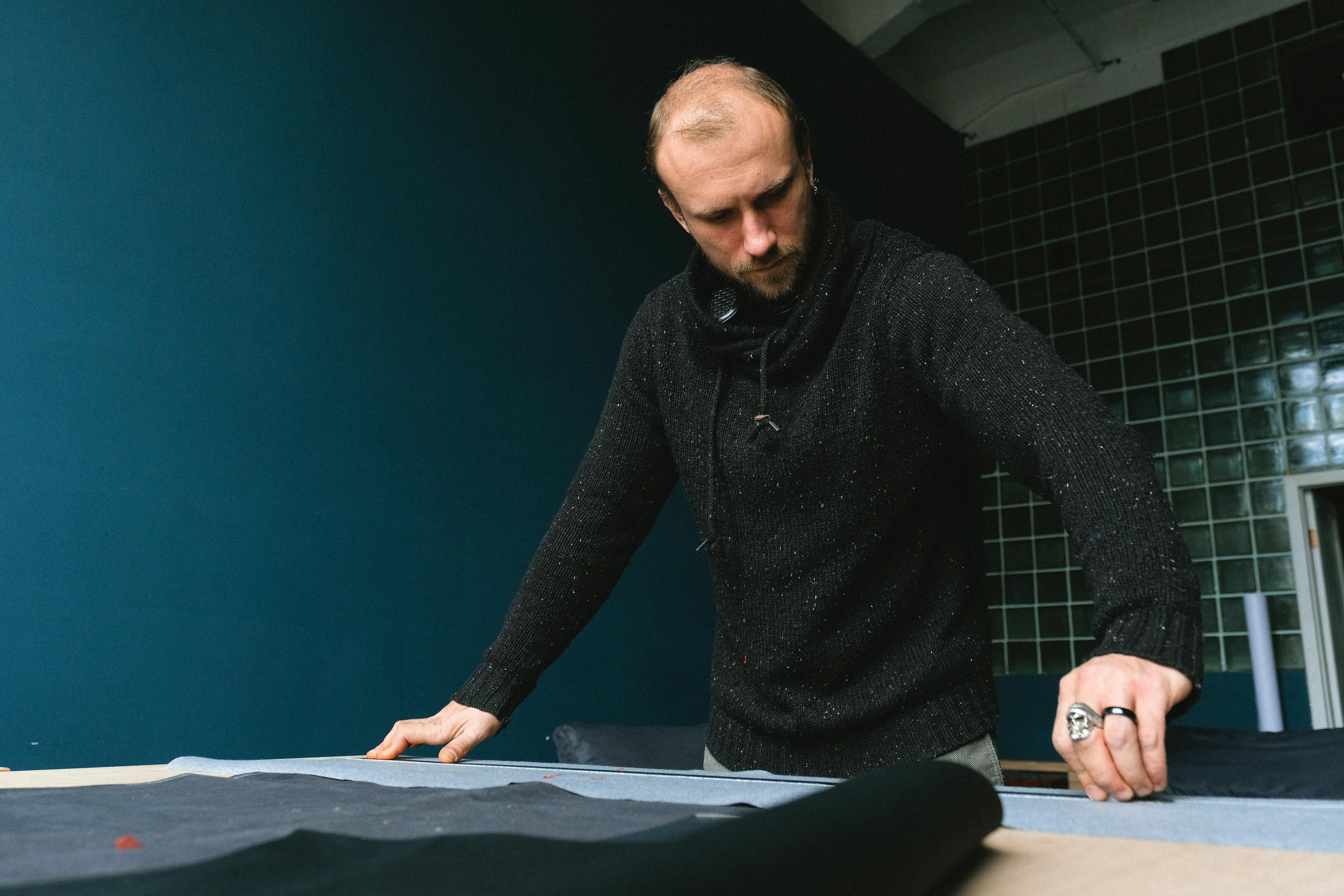
Luxury customization is often described through its visible outcomes: a rare material, a distinctive colour, a precise fit or a private commission. Yet the most consequential part of the experience happens before the final piece is made. It begins with an intangible question: how can a client's personal taste be translated into a result that feels unmistakably individual without becoming excessive, incoherent or disconnected from quality?
For VERTU, High-End Customization is approached as an intelligent operations and AI enablement service for clients seeking unique pieces of uncompromising quality and personal expression. The role is not simply to add options to a product. It is to coordinate a disciplined creative process in which preference, design integrity, technical feasibility and execution remain aligned.
From choice to authorship
The contemporary luxury client is not necessarily looking for more choice. They are looking for a more accurate expression of self. Recent luxury research and commentary have connected fashion and luxury with identity formation, suggesting that clients increasingly expect brands to support journeys of self-discovery rather than provide only functional markers such as quality and aesthetic distinction.
That shift changes the meaning of customization. A monogram, a colour alteration or a material selection can be meaningful, but only when it belongs to a wider point of view. The objective is not to make a piece louder. It is to make it more exact.
A well-considered commission therefore moves through three levels of interpretation:
| Level | Central question | Desired outcome |
|---|---|---|
| Preference | What does the client naturally gravitate towards? | A clear record of taste, use and sensibility |
| Translation | How can that preference become a coherent design language? | A curated set of compatible choices |
| Signature | What makes the finished piece personally recognisable? | A result with distinction, restraint and lasting relevance |
This is where the work of a Haute Couture Coordinator becomes essential. The coordinator protects the client's intention while ensuring that the final composition retains proportion, material intelligence and a sense of permanence.
The quiet infrastructure behind a singular piece
Personalization is frequently presented as a purely aesthetic act. In practice, high-end customization is also an operational discipline. Each decision can influence sourcing, production sequencing, quality control, approval cycles, delivery expectations and aftercare. The more individual the request, the more important the underlying system becomes.
Luxury customization specialists commonly describe the journey as a collaboration between client preference and expert oversight. The process may include an initial consultation, the selection of design parameters, the development of a visual or digital prototype, material and technique review, and final approval before production. This sequence is not bureaucracy. It is what allows creative freedom to coexist with accountability.
VERTU positions AI and digital enablement within this same principle: technology should reduce friction and improve clarity without replacing judgement. A digital layer can help organize references, compare compatible directions, preserve decision history and make complex commissions easier to review. It can also support a more consistent handover between the client, coordinator, makers and service partners.
The result is a quiet operating system for personal expression. It remains largely invisible to the client, yet it gives every visible detail a stronger foundation.
Why restraint is a mark of expertise
The risk in customization is not a lack of imagination. It is an excess of disconnected ideas. When every possible detail is treated as equally important, the piece can lose hierarchy. A sophisticated customization service must therefore know when to introduce an option, when to refine it and when to advise against it.
This principle is reflected across high-end customization disciplines. In automotive customization, for example, established specialists describe their work not as replacing the identity of an existing object, but as improving and personalizing what is already there. They also emphasize that careful execution requires time, collaboration and attention to detail rather than an accelerated, entertainment-led timeline.
The same logic applies to fashion, accessories and other luxury objects. The best result is rarely the one with the most interventions. It is the one in which every intervention appears inevitable.
For the client, this may mean choosing a more restrained palette, reducing the number of visible signatures or selecting a material that will develop character over time. These decisions are not limitations. They are forms of authorship.
A more intelligent client journey
High-End Customization should feel personal from the first conversation, not only at the moment of delivery. That requires a service model capable of listening carefully, retaining context and presenting information in a way that respects the client's time.
The VERTU approach can be understood through four service principles:
1. Interpret before recommending
The starting point is not a catalogue of available modifications. It is an understanding of the client's lifestyle, visual vocabulary, intended setting and relationship with the object. A recommendation becomes more valuable when it is grounded in context rather than novelty.
2. Curate rather than overwhelm
A premium service should narrow the field intelligently. Instead of presenting an unstructured range of possibilities, it should develop a limited number of coherent directions, each with a clear rationale, material logic and aesthetic consequence.
3. Make decisions legible
Clients should be able to understand how a choice affects the overall result. Visual references, digital mock-ups, comparison views and a documented approval path can make the process more transparent while preserving the intimacy of the experience.
4. Protect the final object
The client's personal expression must be balanced with craftsmanship, durability, proportion and brand integrity. Customization is successful when the finished piece remains desirable beyond the moment of commission.
The value of a personal signature
In a crowded luxury market, differentiation does not always come from rarity alone. It can come from relevance: the sense that an object has been shaped with enough precision to belong to one person, and perhaps to one person only.
That distinction matters because a unique piece is not simply a product with altered specifications. It is a physical record of decisions. It carries the client's preferences, the coordinator's judgement, the maker's craft and the operational discipline that brought them together.
This is the central promise of High-End Customization at VERTU: unique pieces of uncompromising quality and personal expression, supported by a service architecture that remains discreet, intelligent and exacting.
The future of luxury customization will not be defined by infinite variation. It will be defined by the ability to transform complexity into confidence. When intelligent operations and haute couture coordination work in concert, personalization becomes more than an embellishment. It becomes a signature protocol - an intentional method for creating something that could not have belonged to anyone else.